Rainbow Tornado
In the heart of Dronningmølle’s heather-covered hills, Esben Weile Kjær’s installation, Rainbow Tornado, introduces a vibrant and queer energy to Rudolph Tegner’s austere concrete sanctuary.
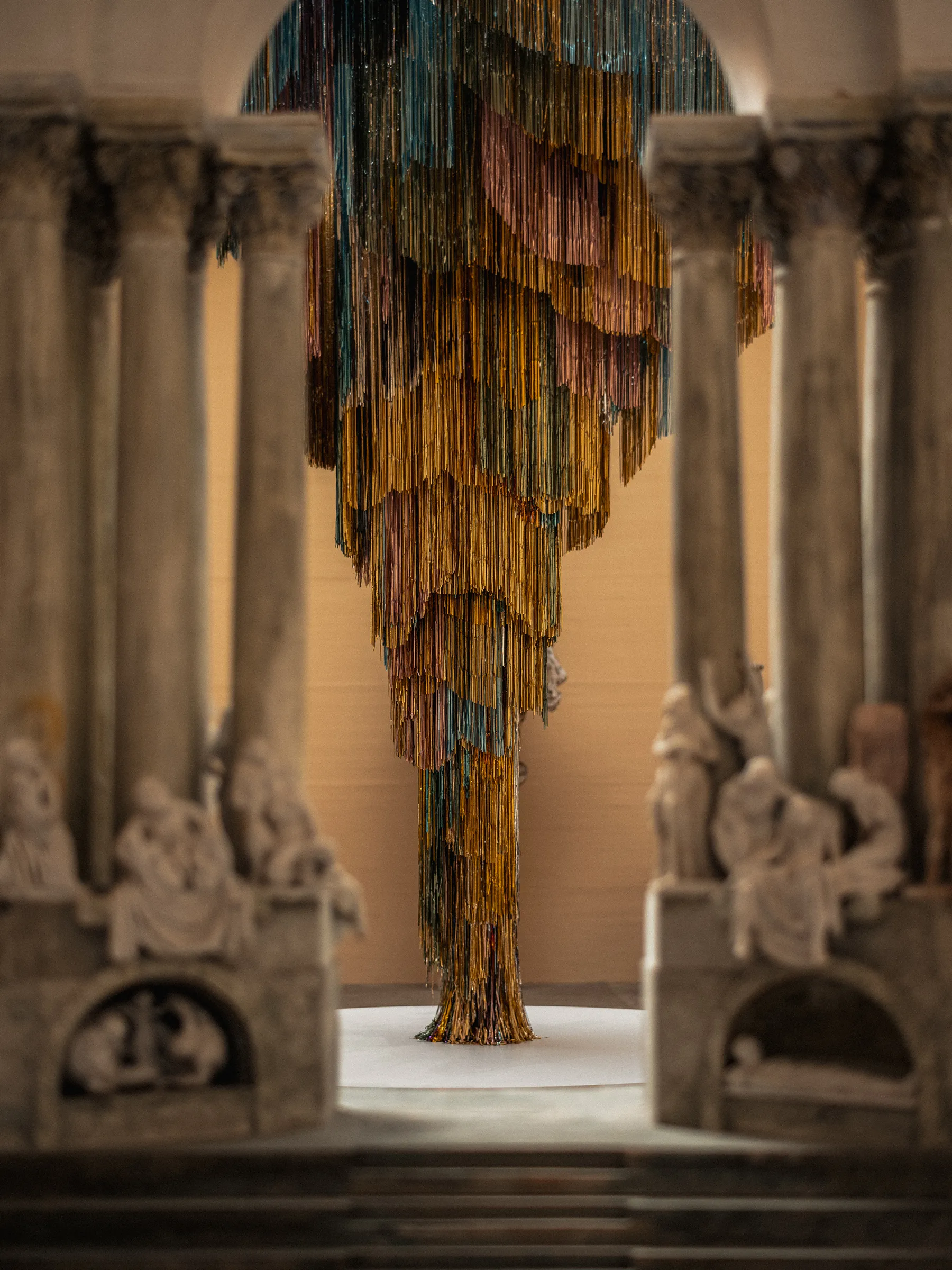
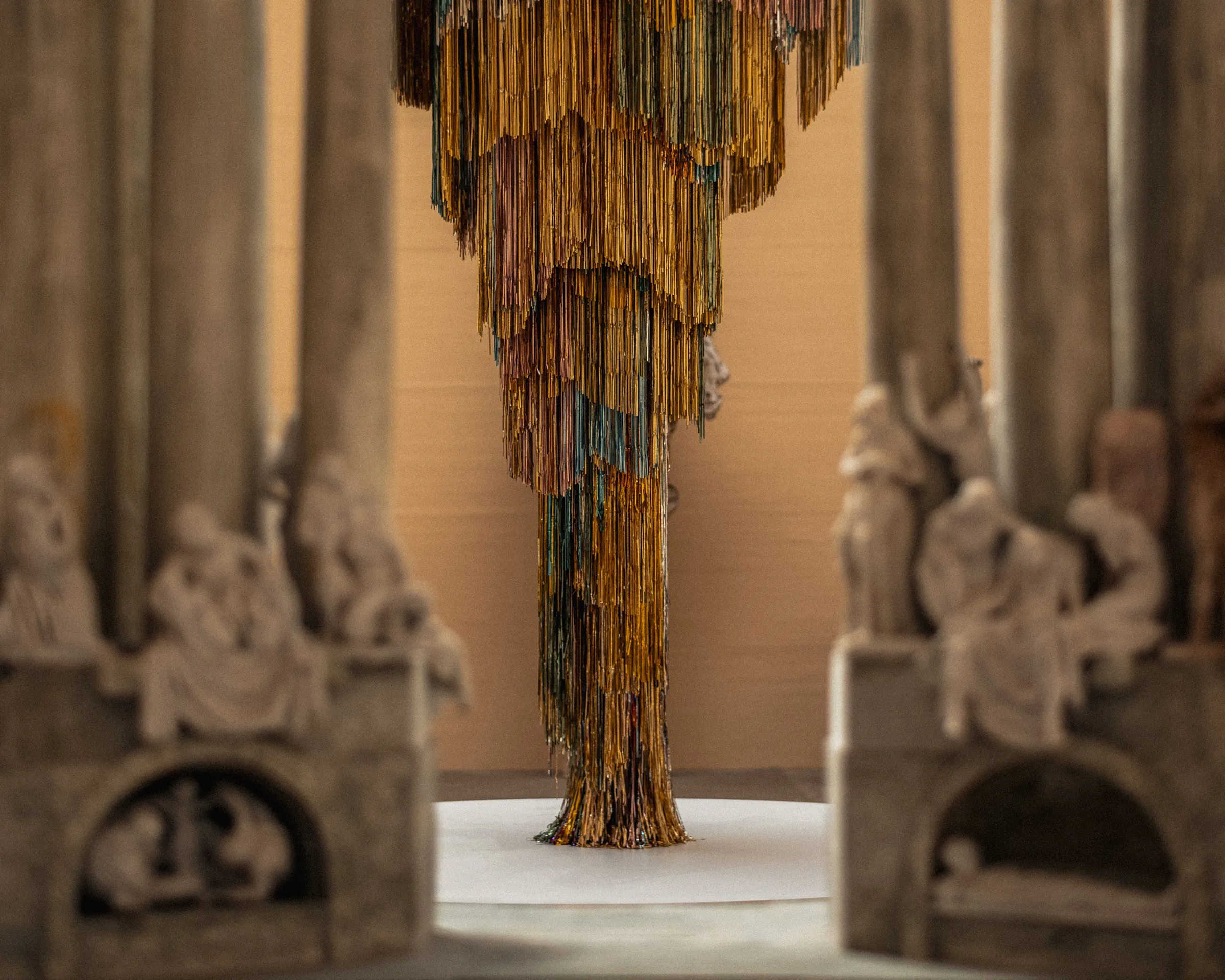
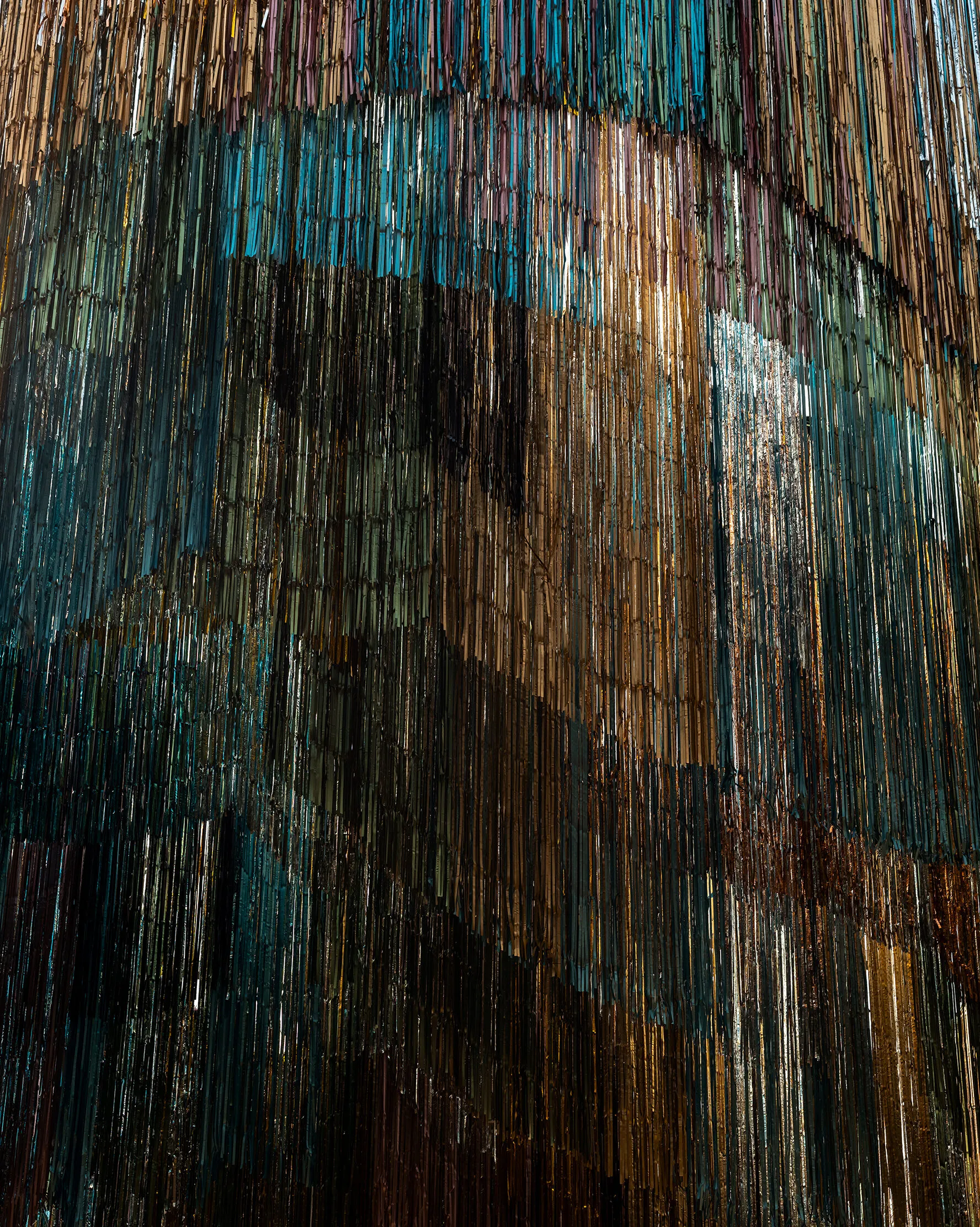
Upon entering the octagonal hall of Tegner’s Museum, your gaze is immediately drawn upward to a towering 10-meter spiral sculpture adorned in shimmering rainbow hues. This centerpiece, positioned directly above Tegner’s own grave, juxtaposes the destructive power of a tornado with the elegance of a chandelier, creating a dialogue between chaos and beauty. The installation, inspired by childhood fairy tales and pop culture, challenges the museum’s traditionally masculine aesthetic with a burst of color and whimsy.
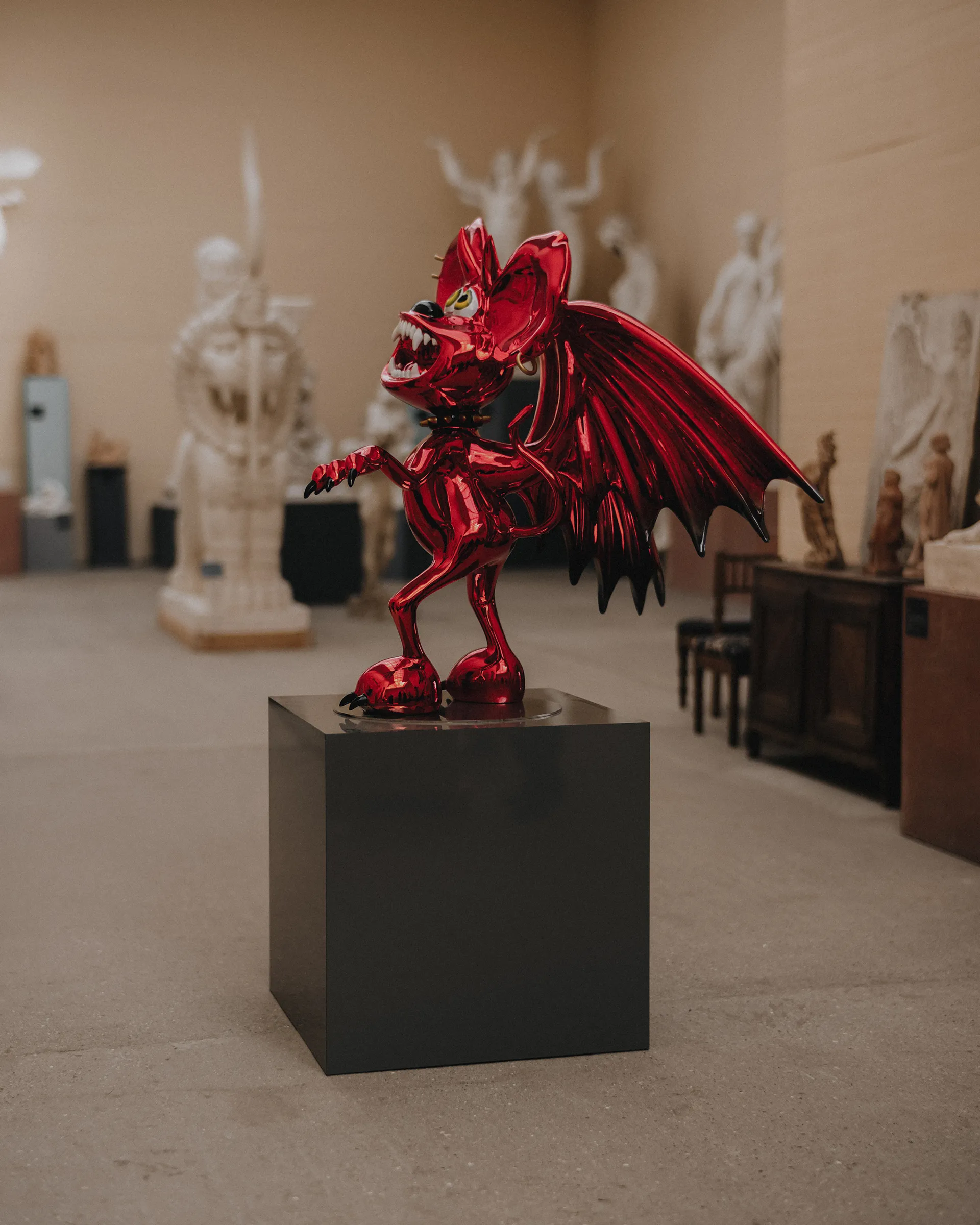
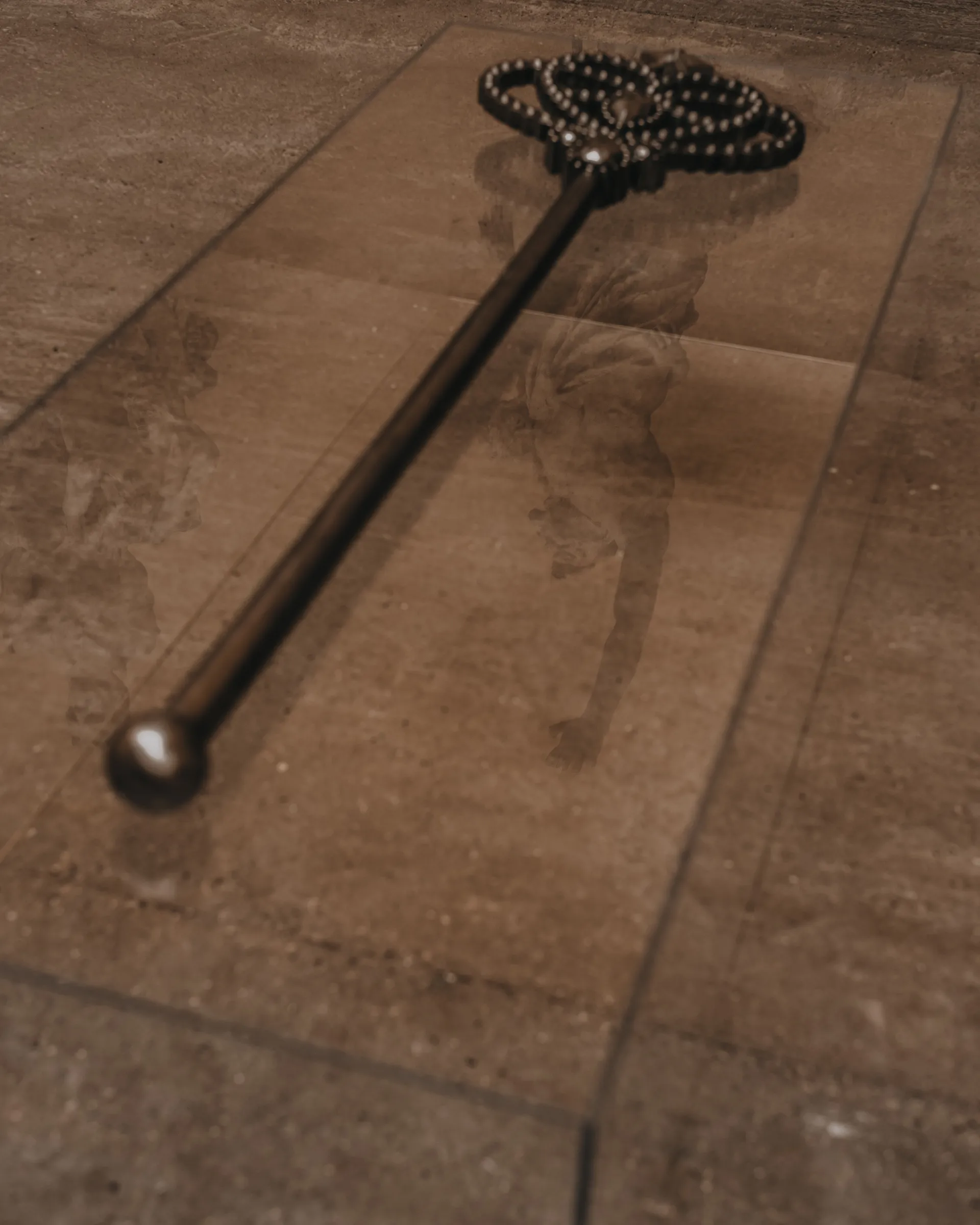
Surrounding the central sculpture are four new works: polished steel depictions of devils and magic wands. These elements infuse the space with a playful yet symbolic tone, inviting viewers to reconsider Tegner’s universe through a queer lens. Weile Kjær’s use of glitter and fantastical motifs serves as both a celebration and a form of resistance, transforming the museum into a “glittering snow globe” of queer fantasy and pop drama.

A devilish pop creature in high-gloss red gleams mischievously among Tegner’s marble giants, injecting Esben Weile Kjær’s playful irreverence into the solemn grandeur of the museum. Its cartoonish grin and exaggerated form offer a stark contrast to the neoclassical surroundings, turning the space into a surreal stage of clashing eras and aesthetics.
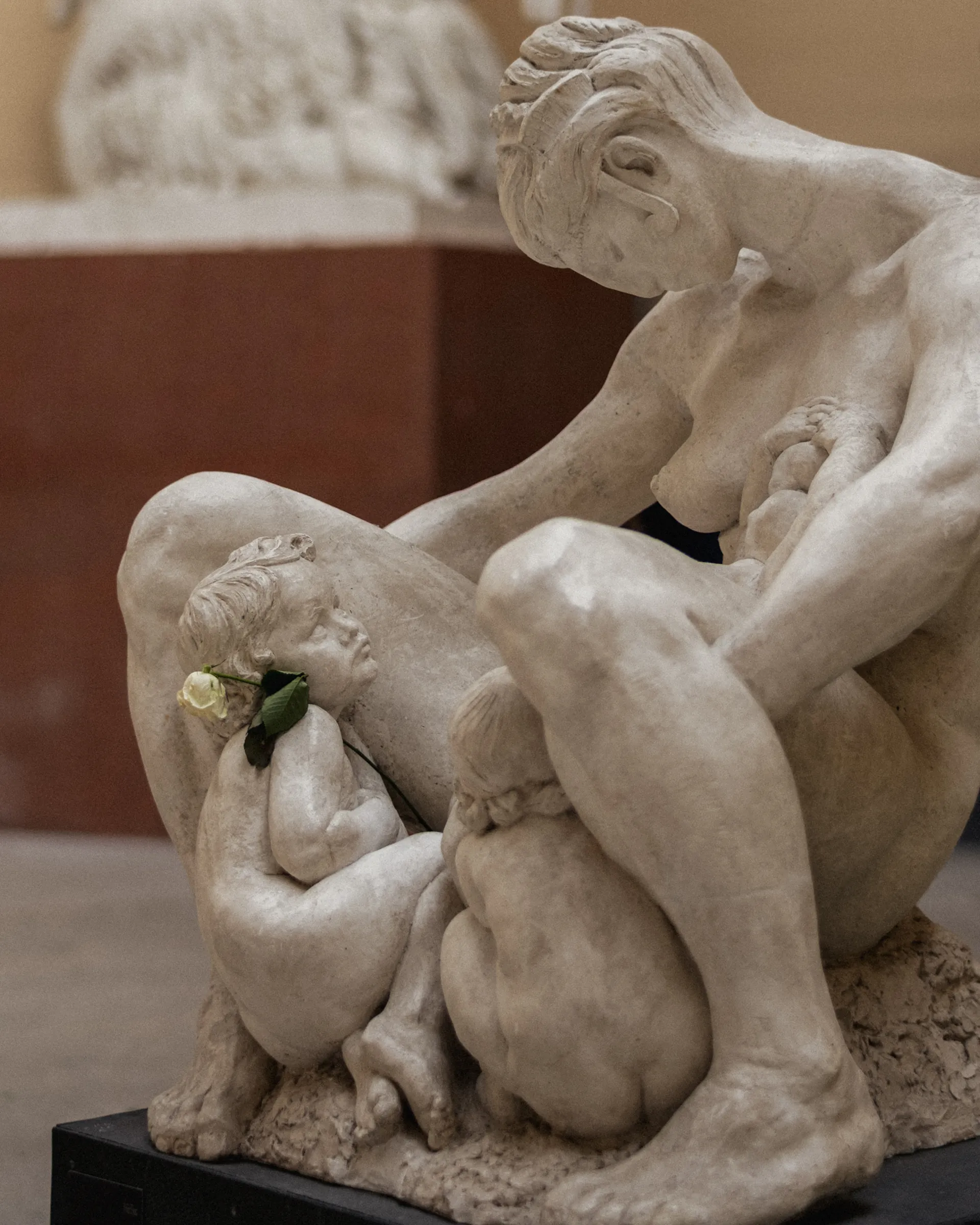
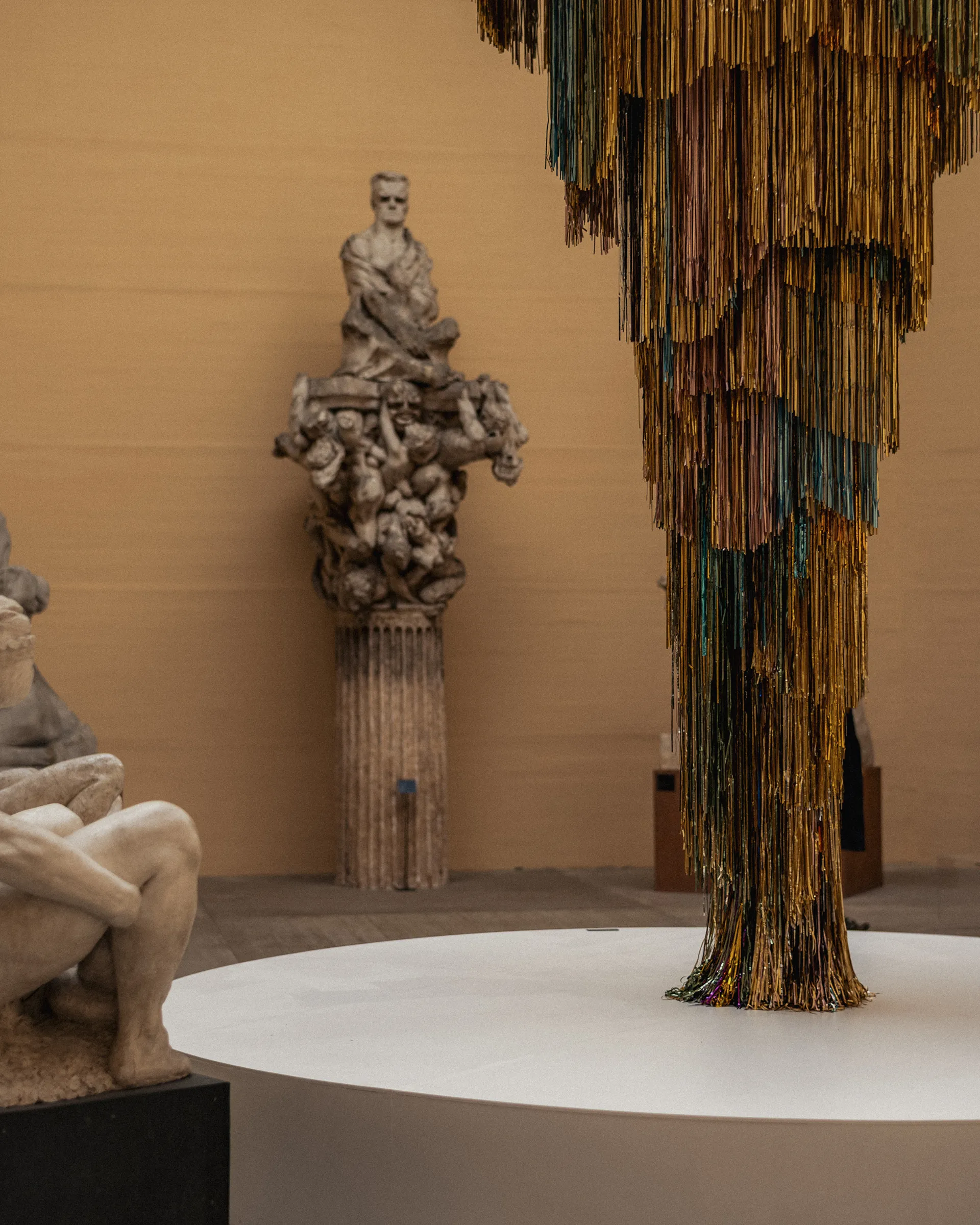

Tegner’s own works, such as Mod Lyset (Towards the Light) and Herakles og Hydraen (Heracles and the Hydra), embody a dramatic and often controversial interpretation of mythological themes. His sculptures, characterized by their monumental scale and expressive forms, reflect his fascination with human struggle and transcendence.
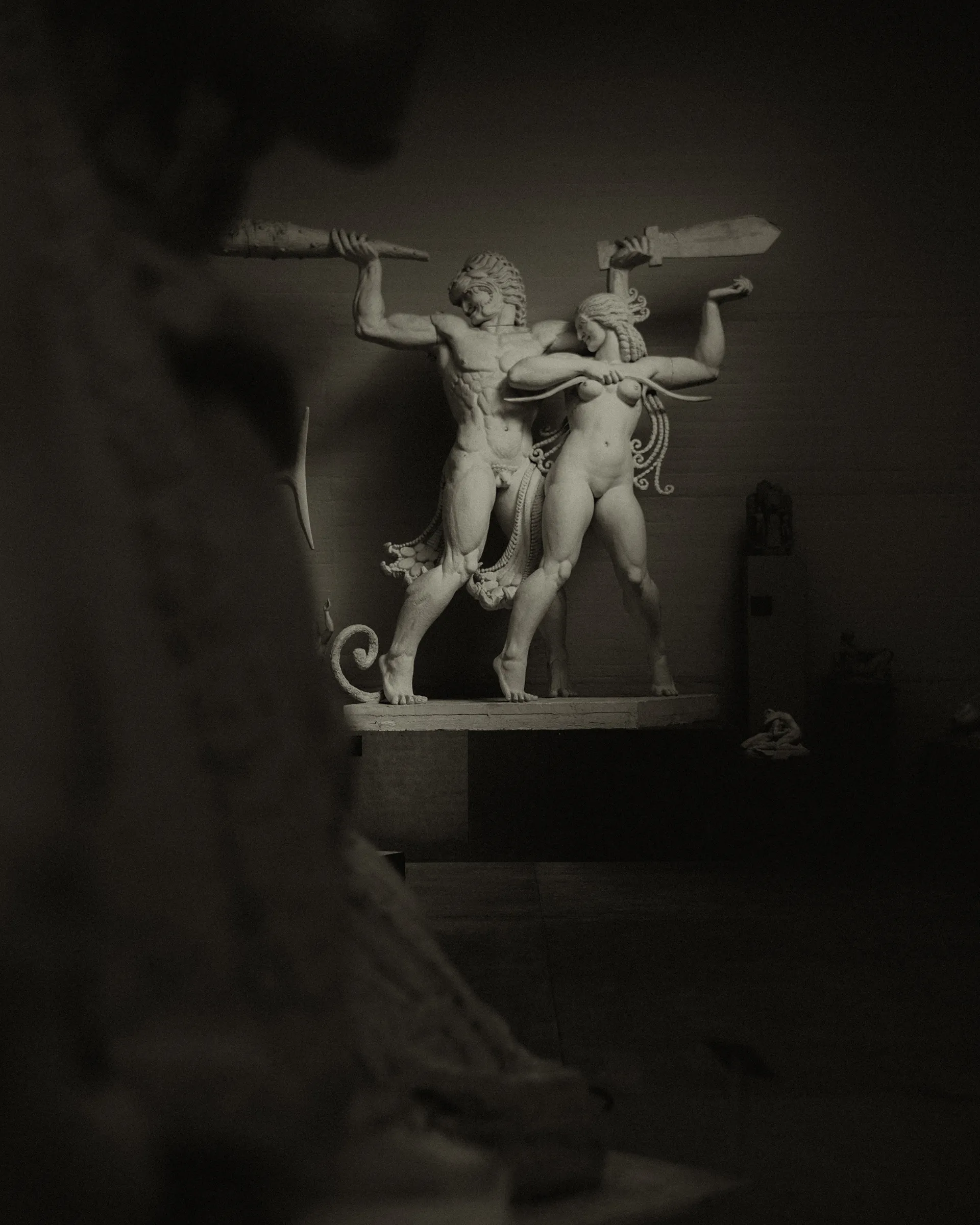
The museum itself, designed by Tegner and architect Mogens Lassen, stands as a testament to modernist architecture. Its bunker-like concrete structure, devoid of large windows, creates an introspective space where natural light filters through skylights, casting dynamic shadows on the sculptures within.
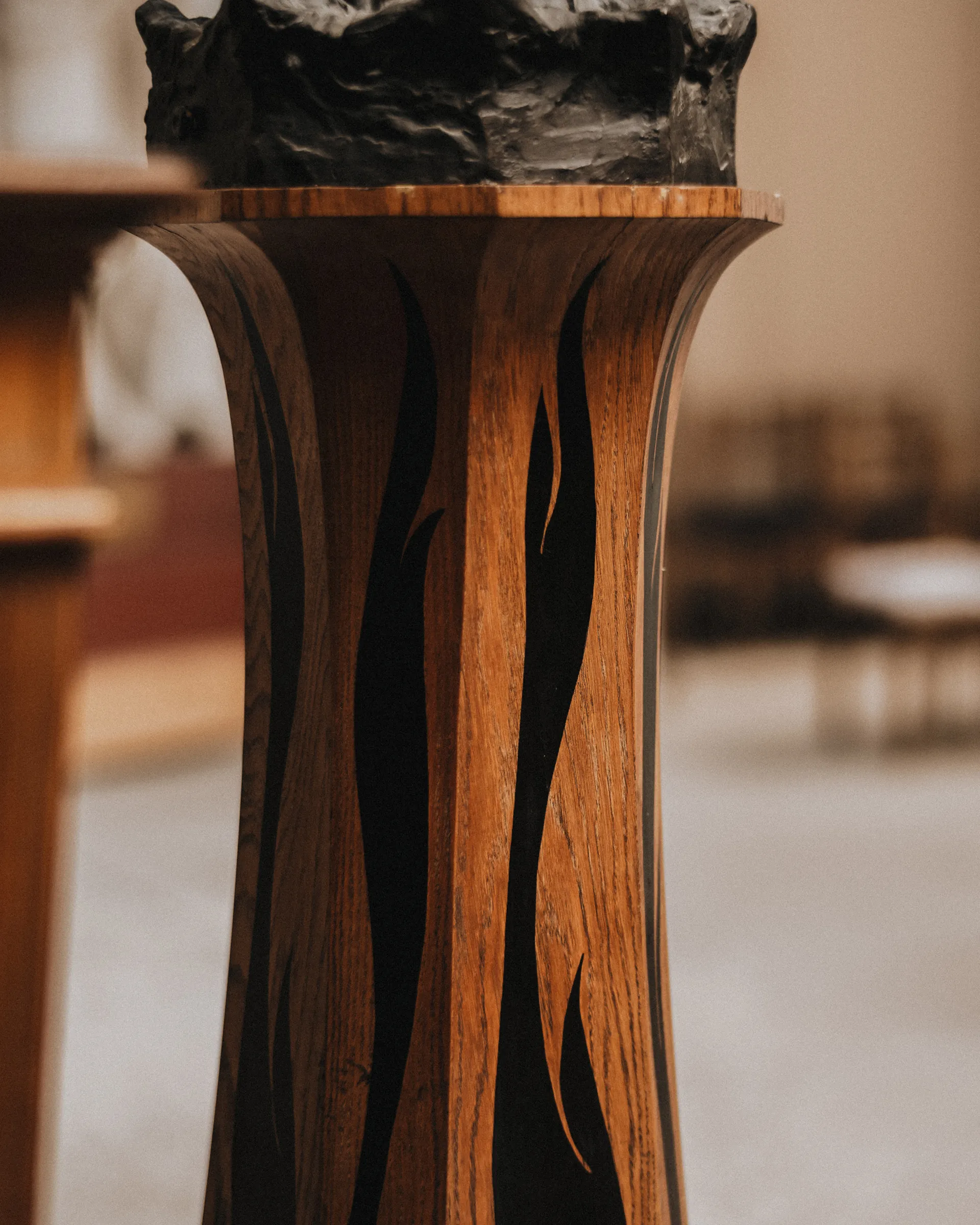
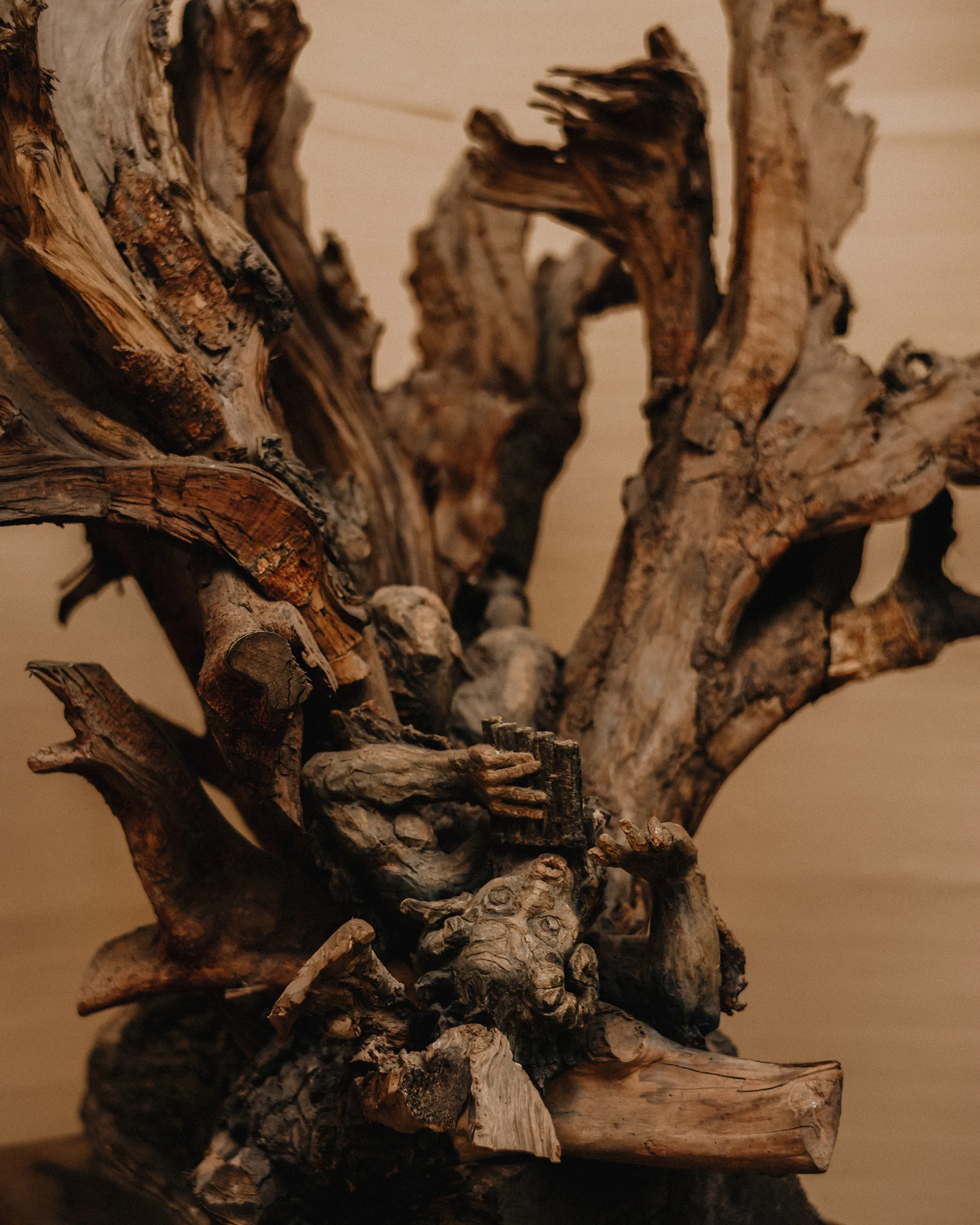

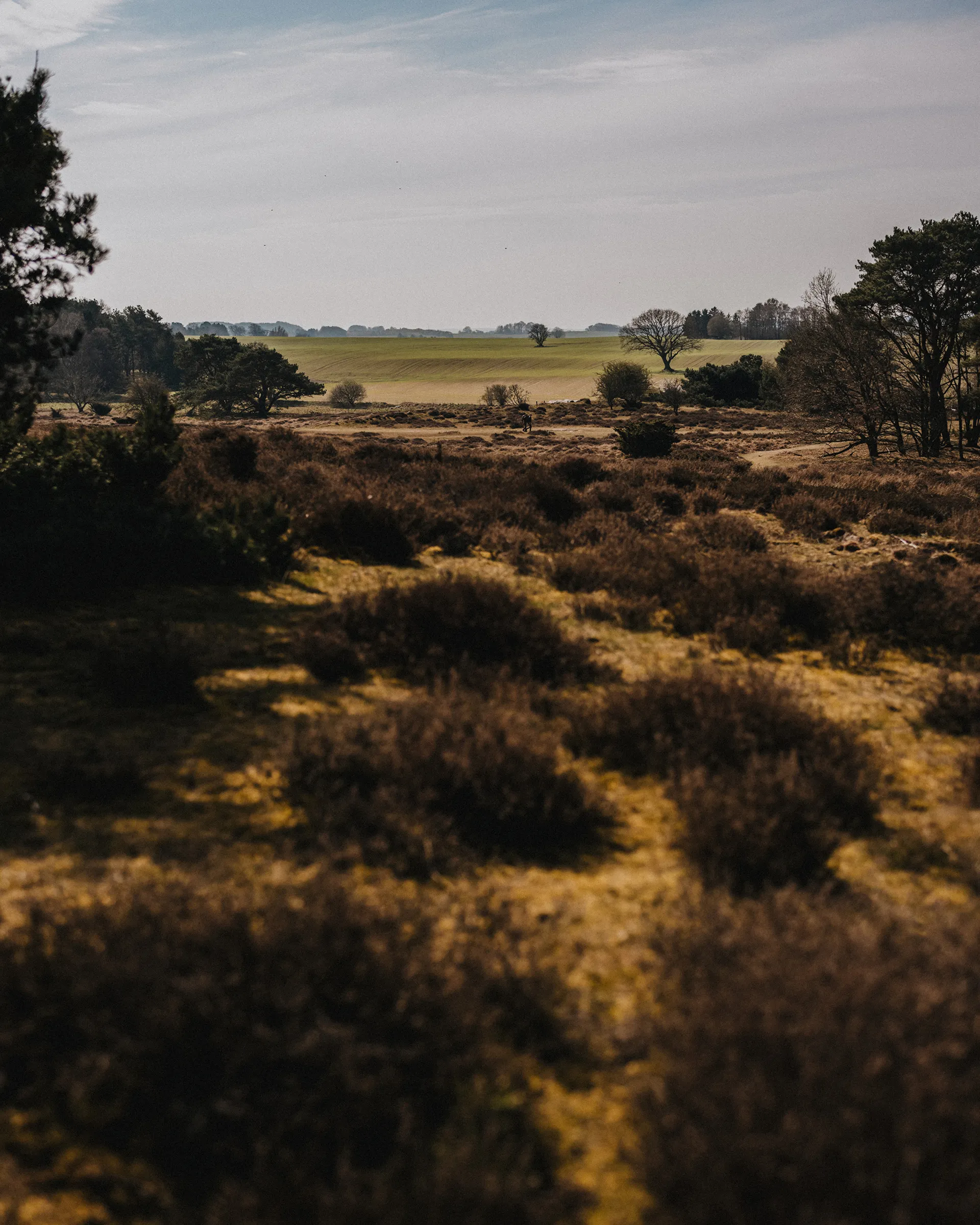
Outside, the surrounding landscape, known as “Rusland,” offers a serene contrast to the museum’s stark interior. The 17-hectare sculpture park features 14 of Tegner’s statues set amidst rolling heathland, inviting visitors to explore the interplay between art and nature.
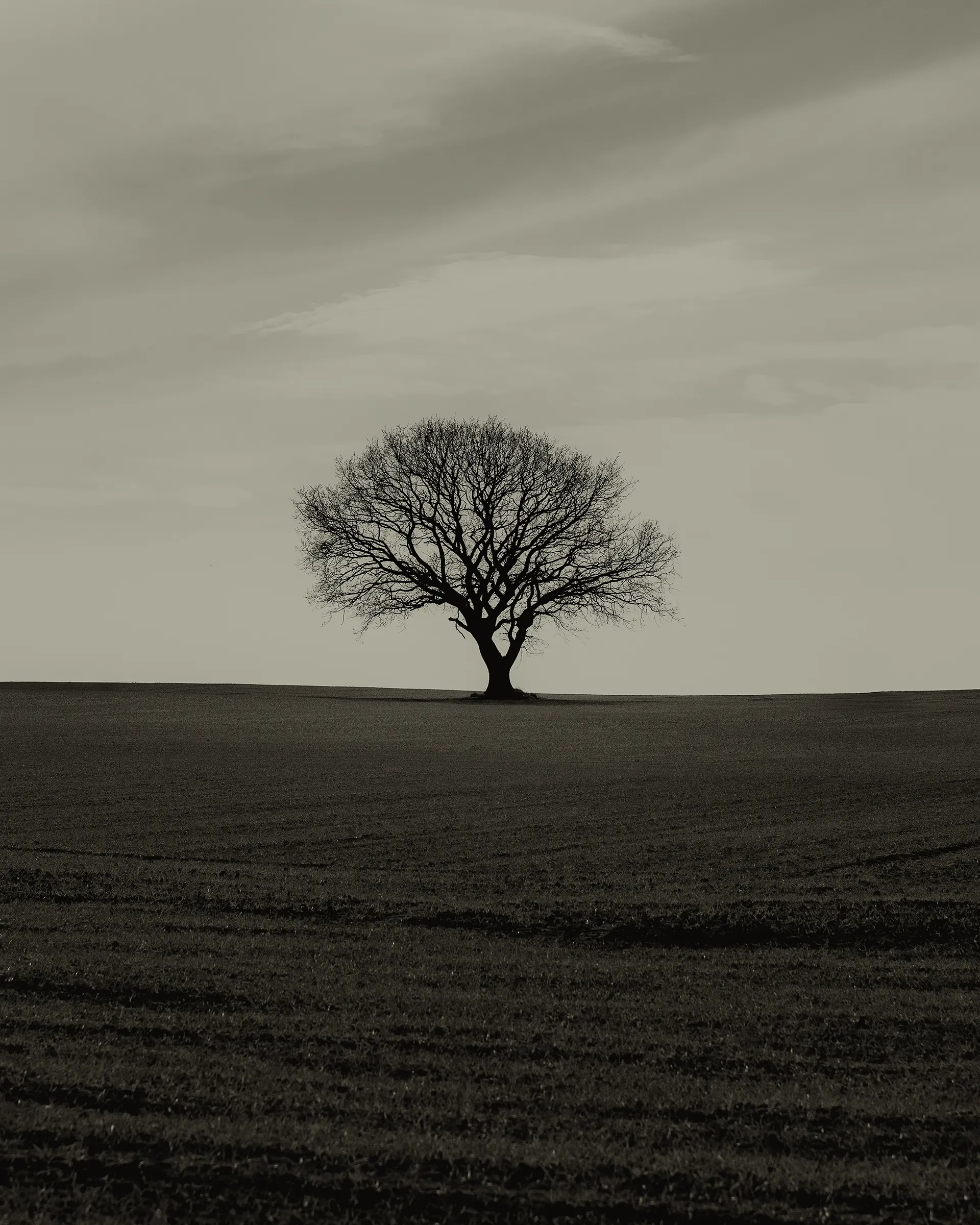
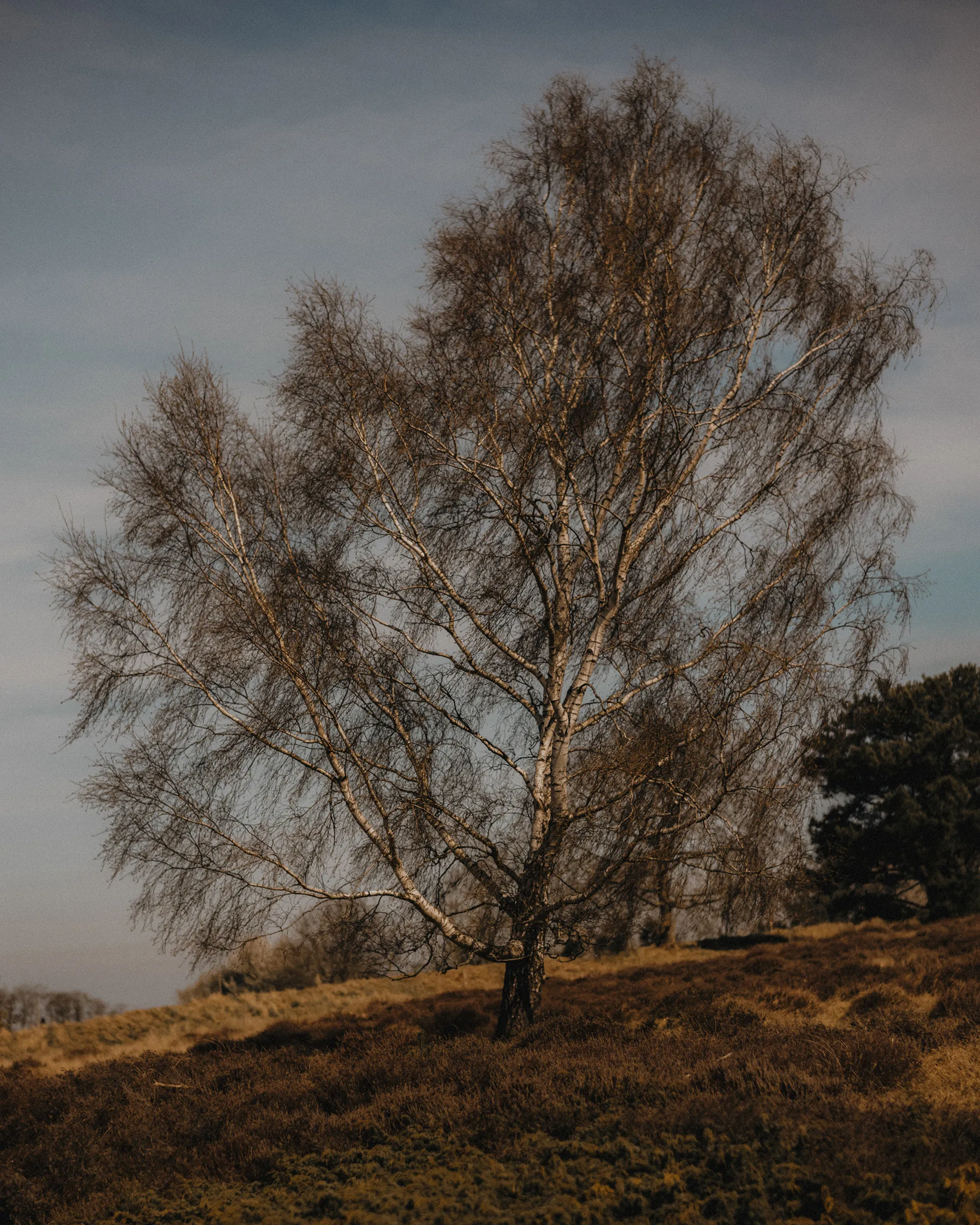
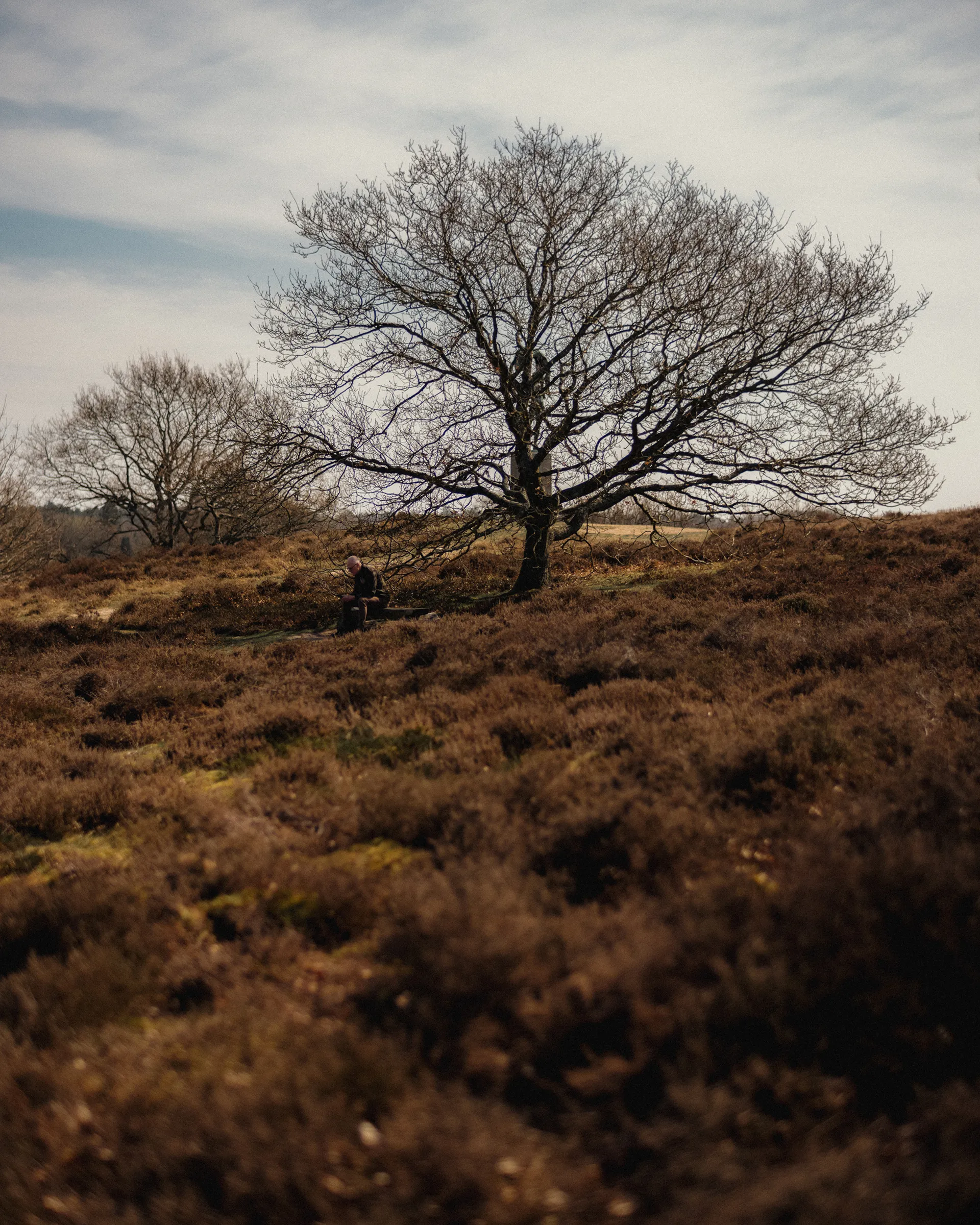
The area surrounding Tegners Museum is dotted with beautiful, solitary trees - each one sculptural in its own right, shaped by the wind and seasons like living monuments across the heath. As you wander along the trails, the sculptures emerge organically from the landscape, creating a harmonious blend of human creativity and natural beauty.